NEWS >> China
My Winter Date with Weihai
source:Hi Anhui 2026-02-25 18:16

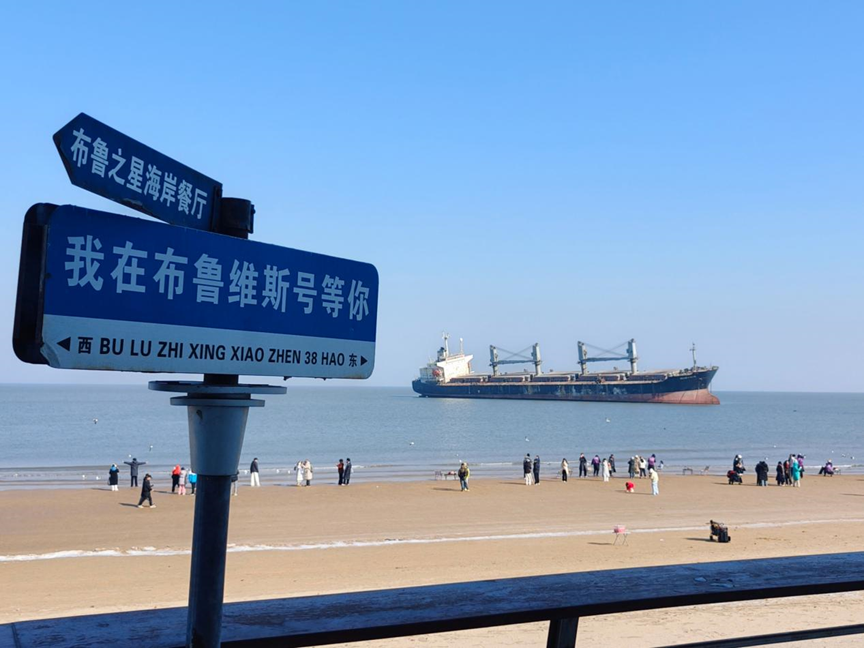
People always say, “How can you see the beauty far ahead if you don’t keep moving forward?” Once, I thought the same way: to keep pushing, to strive relentlessly. But this winter, I heard about a stranded ship in Weihai, Shandong — the Blueways — that has become a hugely popular tourist spot.I couldn’t understand it. What’s so beautiful about a ship that stands still, alone, battered endlessly by the waves? Full of doubt, I decided to visit Weihai and see for myself.

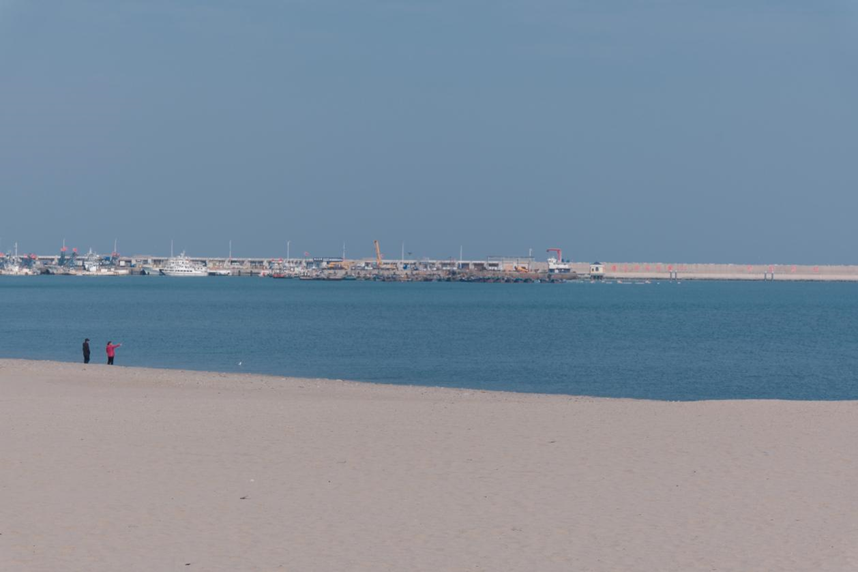
I’m not someone who particularly enjoys the ocean. To me, the sea symbolizes melancholy, vast and boundless; its mystery stirs a quiet fear. But when I stepped out of the car and walked to the shore, the sight of the stranded ship against the Klein blue water struck me straight to the heart.The monsoon at 37° north latitude carries the salt of the sea, carving the Bohai Bay into a piece of blue-toned ice jade. Waves crash against jagged rocks, shattering into white foam; seagulls slice through the lead-gray sky, circling with cries that sound like a song of fate. The 190-meter cargo ship, rusted and weathered, stands quietly above the Bohai Bay, wrapped in the silence and salt of the sea.
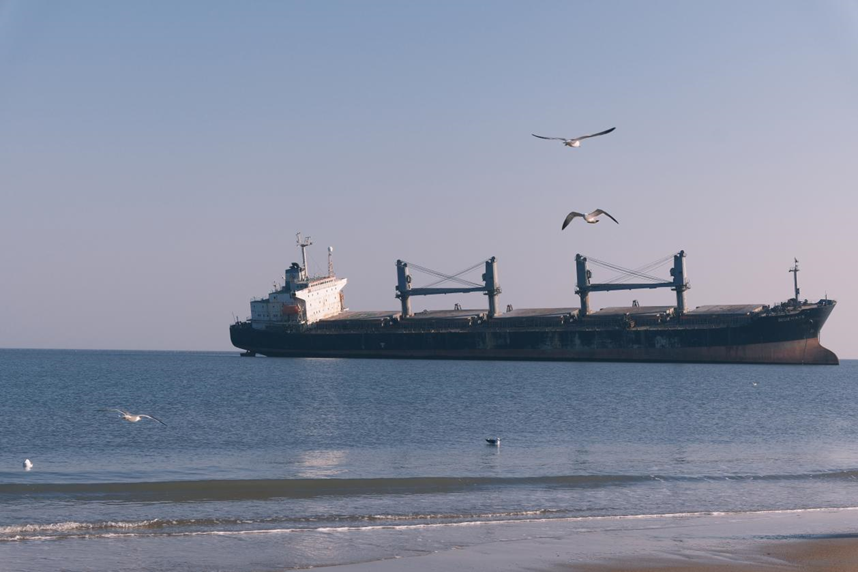
The story of the Blueways is not legendary. It is a foreign cargo ship that ran aground near Chengshan Town, Weihai, affected by the outer circulation of Typhoon Nanmadol. After the crew was safely rescued, the owner chose not to salvage it due to the high cost. So it stayed, becoming a unique landscape.Its rust‑streaked hull, marked by years of ocean voyages, rests quietly between the blue water and white sand. At high tide, waves gently tap its sides; at low tide, reefs covered in thin moss emerge around it. Seagulls hover nearby, occasionally landing to preen their feathers. The giant ship stands isolated between mountains and sea, stripped of its mission to sail, silent yet resolute — like an elder quietly settling into himself, not catering to passing tourists nor yielding to the constant erosion of the waves.The silent Blueways, the endless coastline, the vast sea, and the distant sky together form a cold, gentle, and enduring scene. Every detail seems to hold a soft, quiet story.
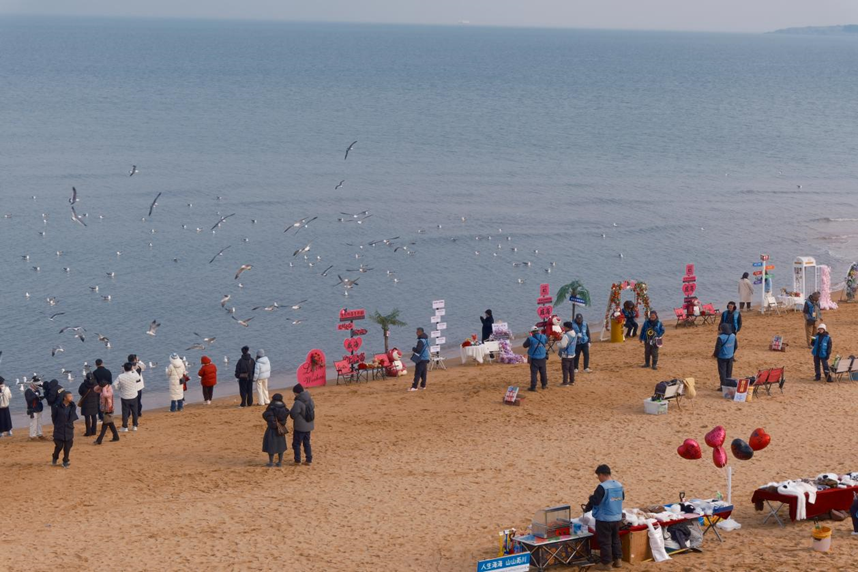
The Blueways ran aground here and may never sail for the horizon again. Yet it did not become a pile of scrap metal. By chance, amid the nationwide cultural and tourism development, it was reborn as a popular attraction, given a new mission: to boost Weihai’s culture, tourism, and economy, blending with sightseeing, leisure, and entertainment.I think life is the same. In this fast‑paced era, everyone urges us to keep moving. But when we pause, we can see a different scenery, a different world. Constant chasing is necessary, but occasional stops, occasional “groundings,” experiencing life in another way — we may capture more moments and feel another kind of touching romance.

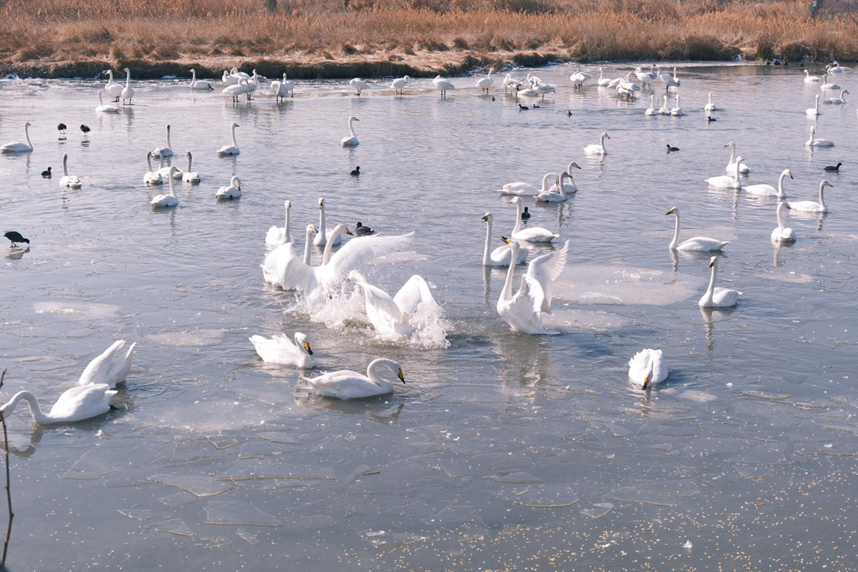
After leaving the Blueways, I visited other scenic spots along the way:Swan Lake, where swans move freely and unhurriedly;Naxianghai, where windmills spin with the wind, merging into the blue sky;Huoju 8th Street, with clean, neatly arranged white walls and red tiles;the Lonely Cabin, which, against the wooden boardwalk and the sea, no longer feels desolate, but shines beautifully on its own.The small city of Weihai seems to embody a kind of “loneliness” everywhere — but it is not loneliness of isolation. It is the clarity of accepting oneself. It tells us: we don’t have to seek everyone’s understanding. Sometimes, we can be like the Blueways, like the Lonely Cabin — stop, feel life quietly, and perhaps meet unexpected romance.

Looking back on this trip to Weihai, I felt the steadfastness of the Blueways, the purity of Swan Lake, the tolerance of Naxianghai, the romance of Huoju 8th Street, and the coziness of the Lonely Cabin… Woven together, they became an encounter with grounding, with loneliness, and with romance — an unforgettable memory in my heart.

(Text/Photos: Zhang Sichen from Anhui Agricultural University)

Web editors: Chen Liang
My Winter Date with Weihai
Hi Anhui 2026-02-25 18:16

People always say, “How can you see the beauty far ahead if you don’t keep moving forward?” Once, I thought the same way: to keep pushing, to strive relentlessly. But this winter, I heard about a stranded ship in Weihai, Shandong — the Blueways — that has become a hugely popular tourist spot.I couldn’t understand it. What’s so beautiful about a ship that stands still, alone, battered endlessly by the waves? Full of doubt, I decided to visit Weihai and see for myself.

I’m not someone who particularly enjoys the ocean. To me, the sea symbolizes melancholy, vast and boundless; its mystery stirs a quiet fear. But when I stepped out of the car and walked to the shore, the sight of the stranded ship against the Klein blue water struck me straight to the heart.The monsoon at 37° north latitude carries the salt of the sea, carving the Bohai Bay into a piece of blue-toned ice jade. Waves crash against jagged rocks, shattering into white foam; seagulls slice through the lead-gray sky, circling with cries that sound like a song of fate. The 190-meter cargo ship, rusted and weathered, stands quietly above the Bohai Bay, wrapped in the silence and salt of the sea.

The story of the Blueways is not legendary. It is a foreign cargo ship that ran aground near Chengshan Town, Weihai, affected by the outer circulation of Typhoon Nanmadol. After the crew was safely rescued, the owner chose not to salvage it due to the high cost. So it stayed, becoming a unique landscape.Its rust‑streaked hull, marked by years of ocean voyages, rests quietly between the blue water and white sand. At high tide, waves gently tap its sides; at low tide, reefs covered in thin moss emerge around it. Seagulls hover nearby, occasionally landing to preen their feathers. The giant ship stands isolated between mountains and sea, stripped of its mission to sail, silent yet resolute — like an elder quietly settling into himself, not catering to passing tourists nor yielding to the constant erosion of the waves.The silent Blueways, the endless coastline, the vast sea, and the distant sky together form a cold, gentle, and enduring scene. Every detail seems to hold a soft, quiet story.

The Blueways ran aground here and may never sail for the horizon again. Yet it did not become a pile of scrap metal. By chance, amid the nationwide cultural and tourism development, it was reborn as a popular attraction, given a new mission: to boost Weihai’s culture, tourism, and economy, blending with sightseeing, leisure, and entertainment.I think life is the same. In this fast‑paced era, everyone urges us to keep moving. But when we pause, we can see a different scenery, a different world. Constant chasing is necessary, but occasional stops, occasional “groundings,” experiencing life in another way — we may capture more moments and feel another kind of touching romance.

After leaving the Blueways, I visited other scenic spots along the way:Swan Lake, where swans move freely and unhurriedly;Naxianghai, where windmills spin with the wind, merging into the blue sky;Huoju 8th Street, with clean, neatly arranged white walls and red tiles;the Lonely Cabin, which, against the wooden boardwalk and the sea, no longer feels desolate, but shines beautifully on its own.The small city of Weihai seems to embody a kind of “loneliness” everywhere — but it is not loneliness of isolation. It is the clarity of accepting oneself. It tells us: we don’t have to seek everyone’s understanding. Sometimes, we can be like the Blueways, like the Lonely Cabin — stop, feel life quietly, and perhaps meet unexpected romance.

Looking back on this trip to Weihai, I felt the steadfastness of the Blueways, the purity of Swan Lake, the tolerance of Naxianghai, the romance of Huoju 8th Street, and the coziness of the Lonely Cabin… Woven together, they became an encounter with grounding, with loneliness, and with romance — an unforgettable memory in my heart.
(Text/Photos: Zhang Sichen from Anhui Agricultural University)

Web editors: Chen Liang