


On the morning of April 1, craftsmen were ready to dry freshly steamed wet processed grass on the mountain.
In the spring of 2026, journalists visited Jingxian County, Xuancheng City prior to the first national reading week, and focused lenses on the ancient craftsmanship of Xuan Paper Making Techniques, an item inscribed on both the UNESCO intangible cultural heritage (ICH) list and national ICH list.

On March 31, a craftsman was processing materials.

On March 31, craftsmen were fluffing the grass.

On March 31, a craftsman was steaming materials.
There is no roar of machines, only the murmur of flowing water, the rustle of bamboo blinds, and the steady breathing of the craftsmen. Masters such as Wang Xifa, a national-level ICH representative inheritor, and Zhou Donghong, a provincial-level ICH representative inheritor, are working with a series of intricate processes, writing the timeless legend of “paper lasting for a thousand years.”
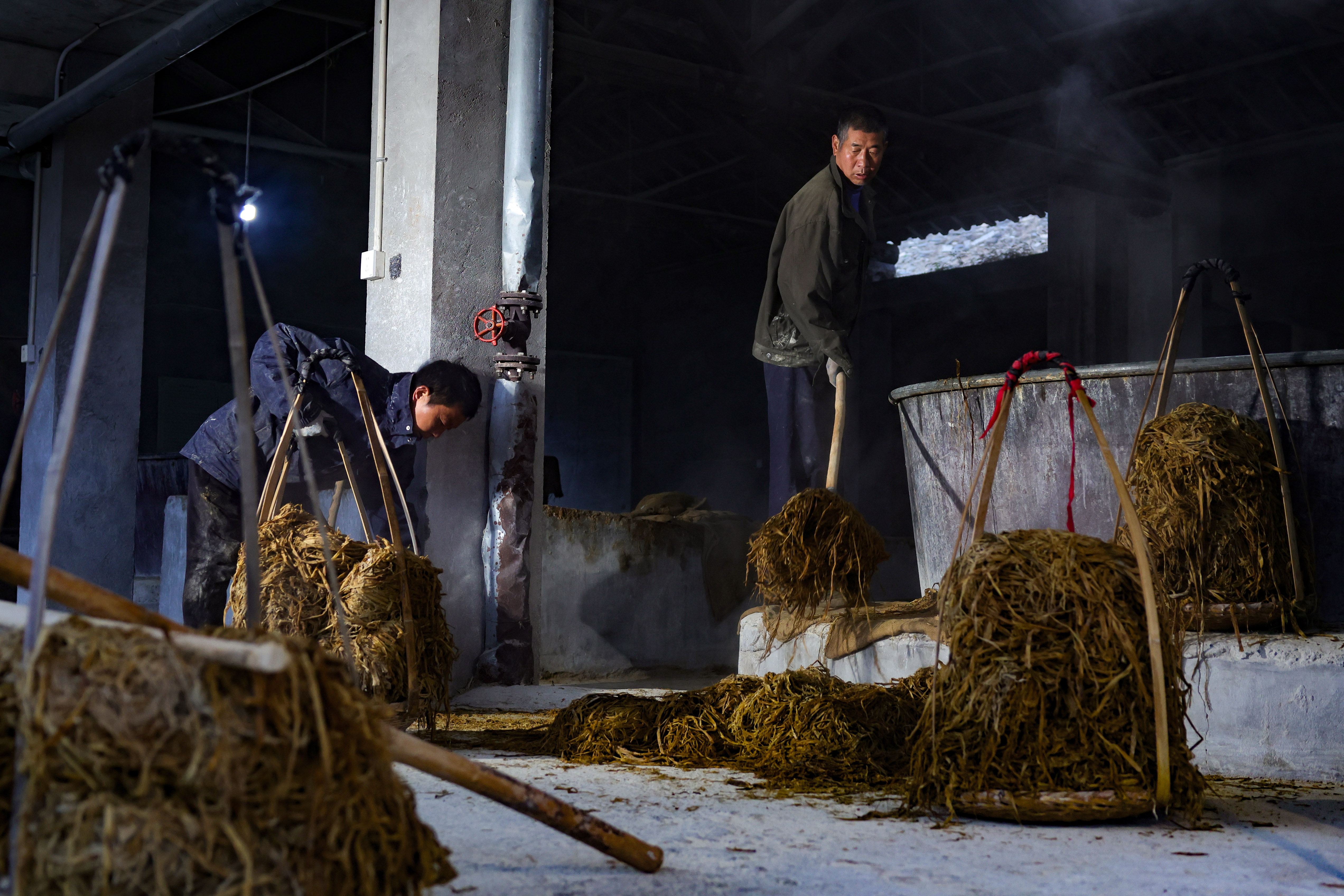
On April 1, craftsmen placed the steamed grass material on carrying poles, ready to carry it up the mountain for drying.

On the morning of April 1, craftsmen spread processed grass out on the mountain to dry.

On the morning of April 1, craftsmen spread processed grass out on the mountain to dry.
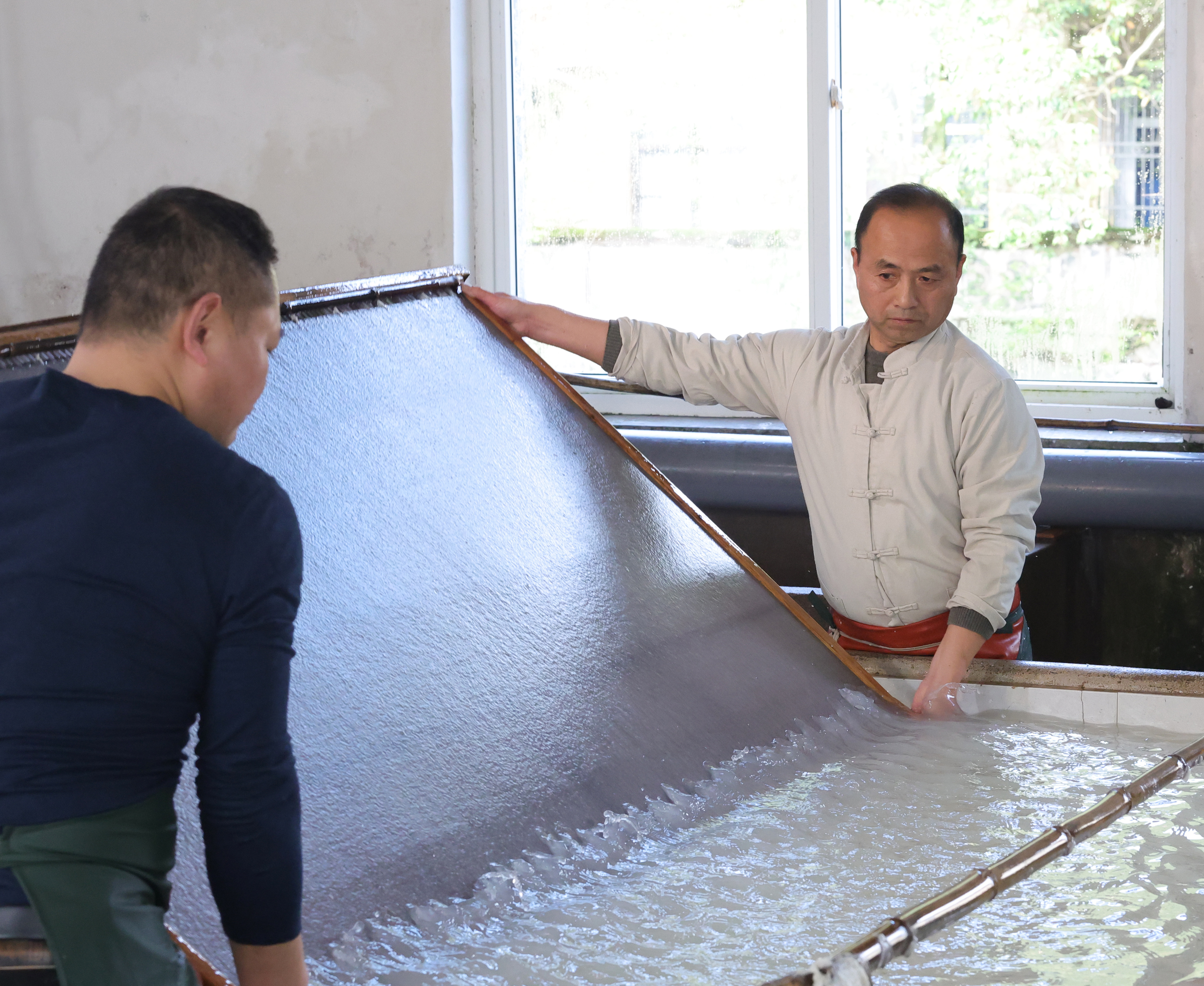
On April 1, Zhou Donghong, a provincial-level ICH inheritor in the Red Star Xuan Paper Factory was making Xuan paper together with his apprentice.
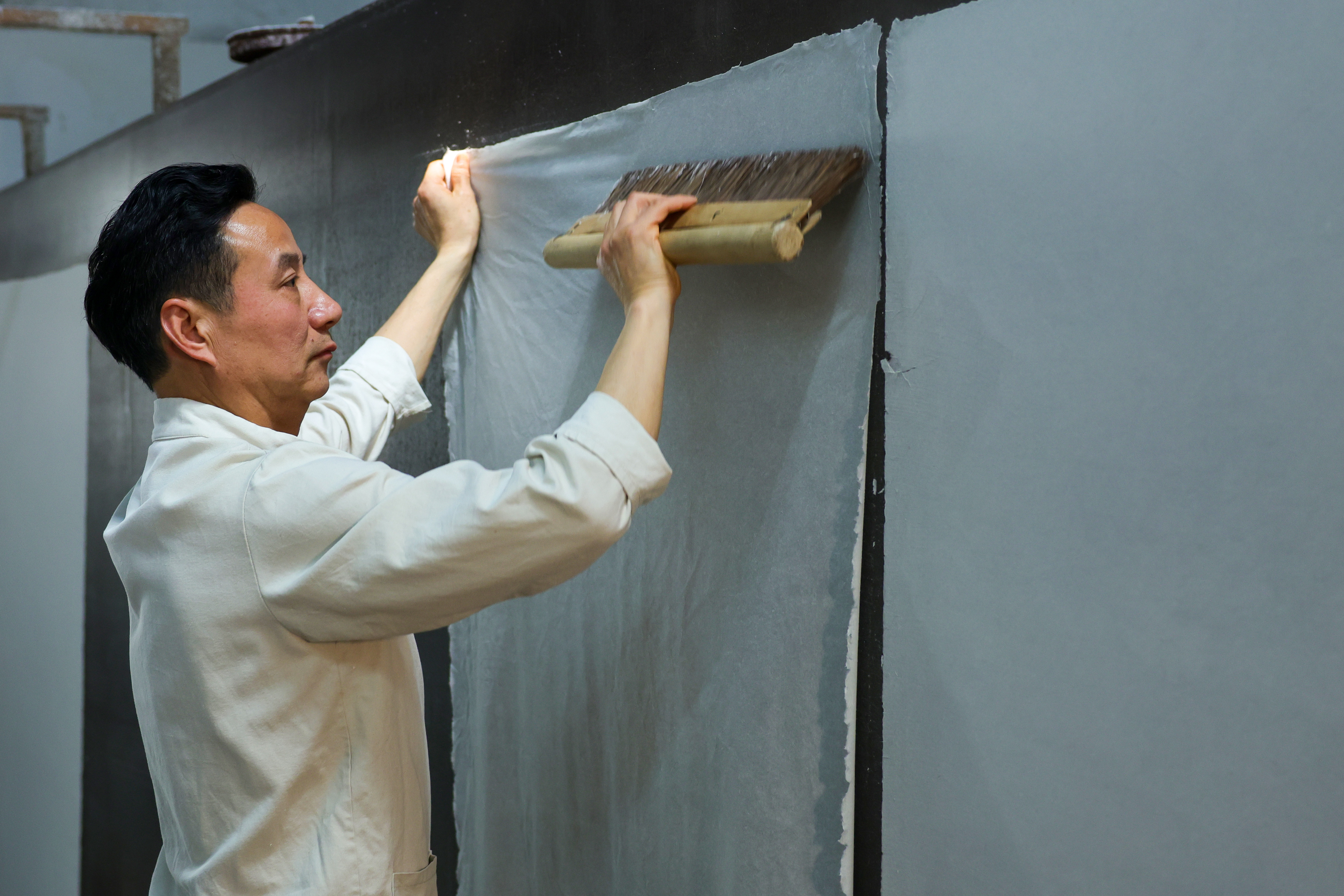
On April 1, Wang Xifa, a national-level ICH inheritor, was precisely sticking wet Xuan paper onto the high-temperature drying wall with a pine needle brush in the paper-drying workshop of Red Star Xuan Paper Factory.

On April 1, a craftsman was carefully cutting Xuan paper in the paper-cutting workshop of Red Star Xuan Paper Factory.
What we read is not merely the words printed on paper, but the paper itself that bears them—a wordless book endowed by nature, refined through exquisite craftsmanship, and preserved by the passage of time.
(Reporter: Wang Lanlan)
Web editors: Chen Liang, Ding Lili